Vin Your training system

2020 — today · Layer by layer

How Vin was made

Vin didn't start as a company, and it didn't follow a master plan.

A pandemic, a personal need and a notebook to write down what to do each day.

Then the notebook moved to my phone, always at hand.

That was the idea: from goal to plan, and from plan to day-to-day training. Every workout had to make sense, the progression had to hold together, and I needed to be able to plan it, ride it, review it and start again, all from one place: my phone.

The philosophy that would become the vinagril way was already there before it had a name: consistency without drama, individualization, progression, showing up ready to ride and finishing with that familiar grimace that says it was worth it. The cycle Vin stands for today — plan, execute, review, adapt — didn't start with a character. Baldomero didn't exist on day one. He came later, when that space between plan and reality needed a face and a voice.

What follows is that story, as it happened: from notebook to trainer, from trainer to numbers, from numbers to a system, and from a system to a community.
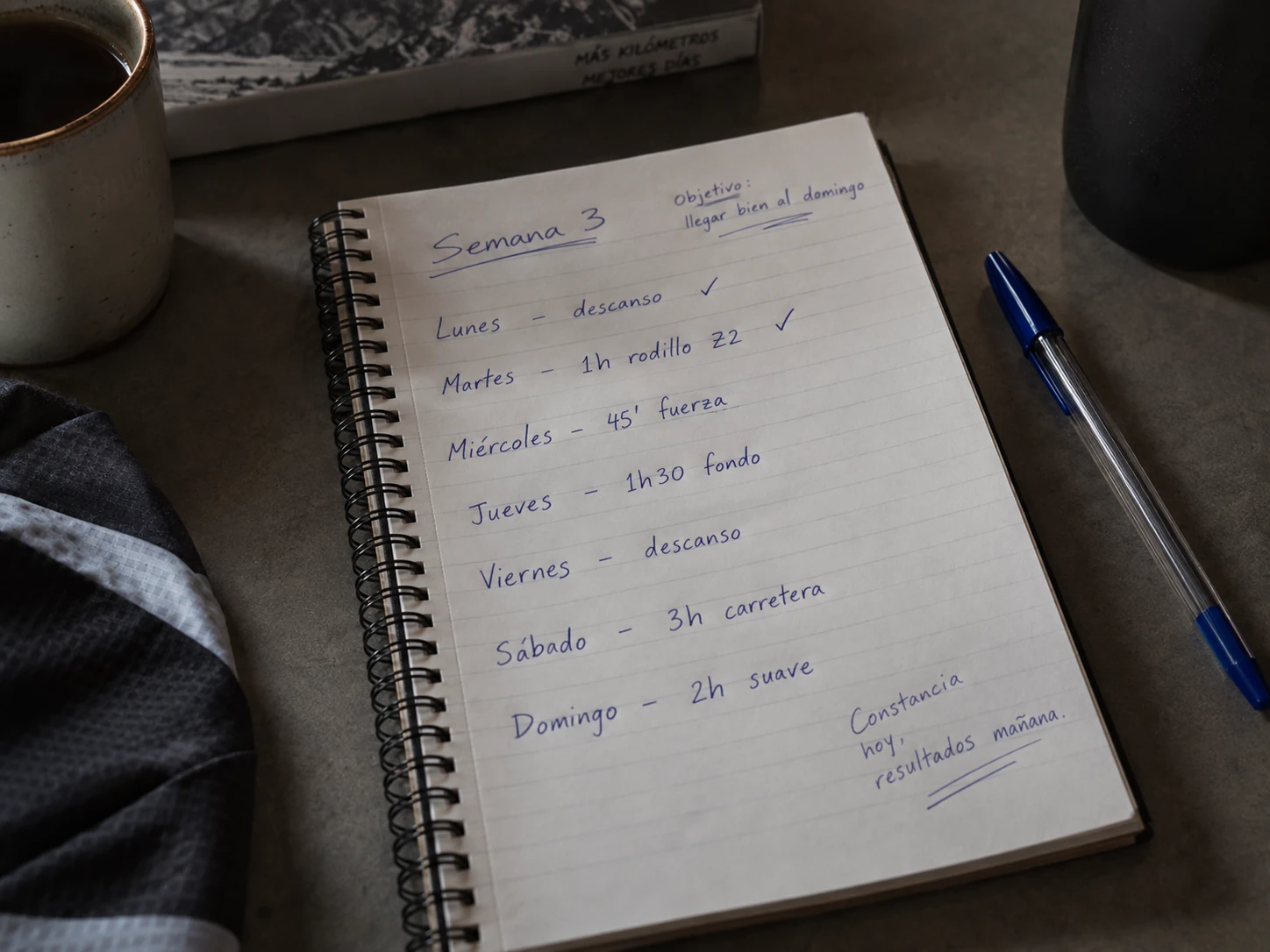
Handwritten weekly training plan in a notebook, where the Vin plan began
The notebook · Where the plan began.

THE FIRST VIN

The first Vin took shape in mid-2020. I don't have any screenshots of that version.

It was a very different thing: smaller, more direct, more fragile.

There was a plan. Not a catalog of plans, but My plan: “El Vinagre”.

Structured weeks telling you what to do each day.

It leaned on the Coggan model to organise load and let you see the intent behind each session.

And there was a basic Strava integration to pull in rides I'd done outside Vin and account for them. Little else. Just enough to give my training some continuity.

Mid-2020 · The first Vin. No screenshots remain from that version.

FROM NOTEBOOK TO TRAINER

The idea was no longer just to organise my training, but to ride the sessions too. If the plan was already on my phone, the obvious next step was to let it control the trainer.

It wasn't a strategic decision. It was a practical need: make use of what I already had and turn it into something genuinely useful for training at home.

2021 · When the plan started setting the watts.

Phone showing Vin's old workout screen next to the bike in the cave, 2021
Vin Spinning · 2021
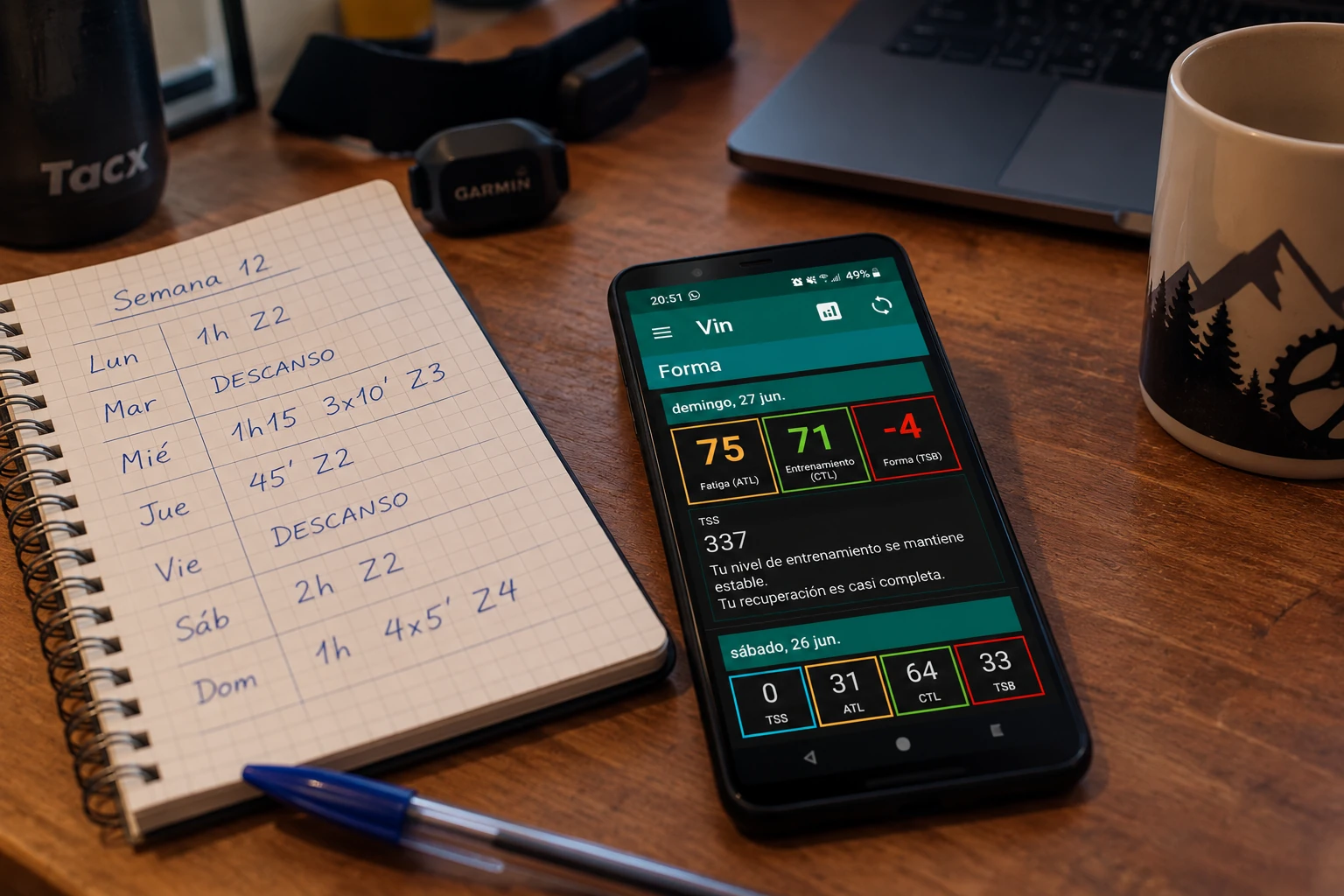
Phone on the table showing Vin's legacy Fitness screen with ATL, CTL, TSB and TSS, next to the notebook
2021 · Fitness status, my first real view of training load.

THEN CAME THE NUMBERS

Coggan was a reference point, not gospel. It helped me make sense of what was happening as I trained day after day: load, fitness, fatigue. I started adding charts that weren't decoration; they were a record of the work I'd done.

Following the plan was no longer enough. I needed to understand what it was doing to me: where it pushed, where it gave me room to recover, and how progression and fatigue showed up on a curve.

The numbers weren't there to tell me who I was, but to help me decide what came next.

I PLAN. THEN I FOLLOW IT.

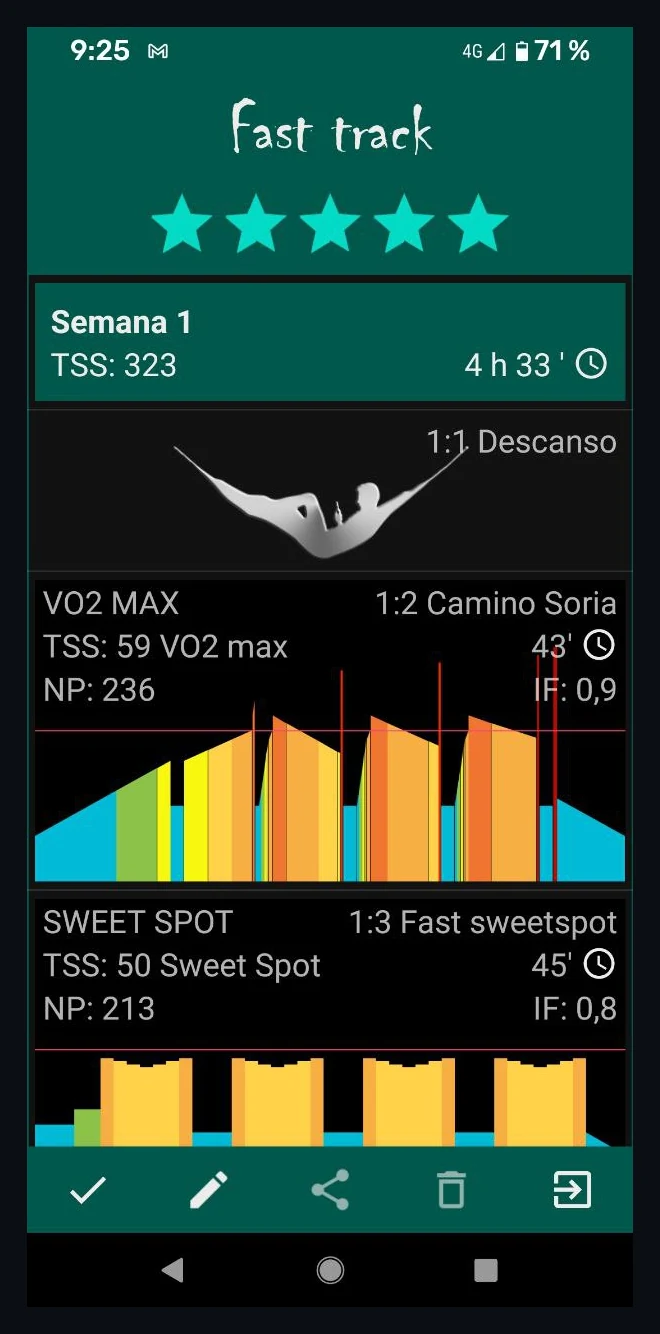
The plan became clearer. Structured weeks, each session with a clear purpose: TSS showing how demanding the day was, VO2 max blocks for days when breathing easy wasn't the point, Sweet Spot to build without breaking, and long rides to build staying power.

Every session knew why it was there. It wasn't a loose list of intervals; it was a progression you could follow and, above all, review. The notebook had become a system.

2021 · Weeks with intent, load and goal in sight.

Historical screenshot of Vin's Fast Track plan in 2021
2021 · Fast Track, the plan was starting to work as a system.
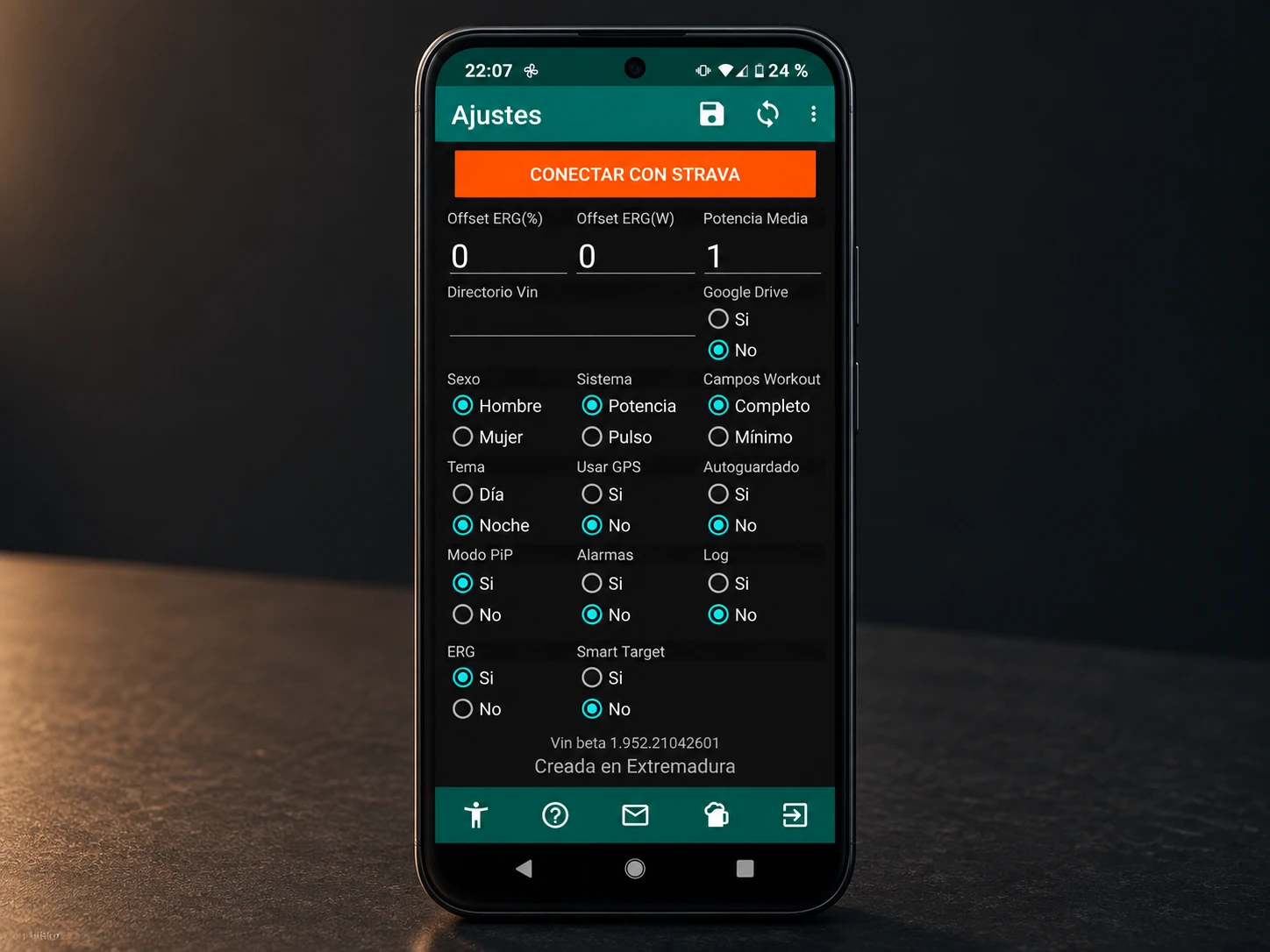
Historical screenshot of Vin's Strava connection in 2021, with the CONNECT WITH STRAVA button visible
2021 · CONNECT WITH STRAVA, exactly as it appeared.

ALL MY TRAINING HAD TO LIVE IN ONE PLACE

Not everything happened on the trainer. There were outdoor rides, activities logged on Strava. At first, the connection was basic: bring in the essentials so my training didn't live in two separate worlds.

The plan couldn't ignore what you did outside Vin. If it counted the work done in Vin but forgot the rest, it wasn't a system. It was only part of the picture. Bringing it all together was a way to be honest about the work you'd done.

AND THEN PEOPLE STARTED ASKING FOR IT

Vin was born for personal use. Then friends tried it. Then someone else. On ForoMTB people started talking about it, with no campaign, no announcement. One by one, sharing the file, explaining how to install it.

Eventually it made sense to put it on Google Play. Not as a launch, just so anyone who wanted it could get it without having the file passed along to them.

At first it was: “I need this.” Then it also became: “Could you make it do this?”

2021 · From personal use to something shared, one rider at a time. ForoMTB, friends and Google Play.

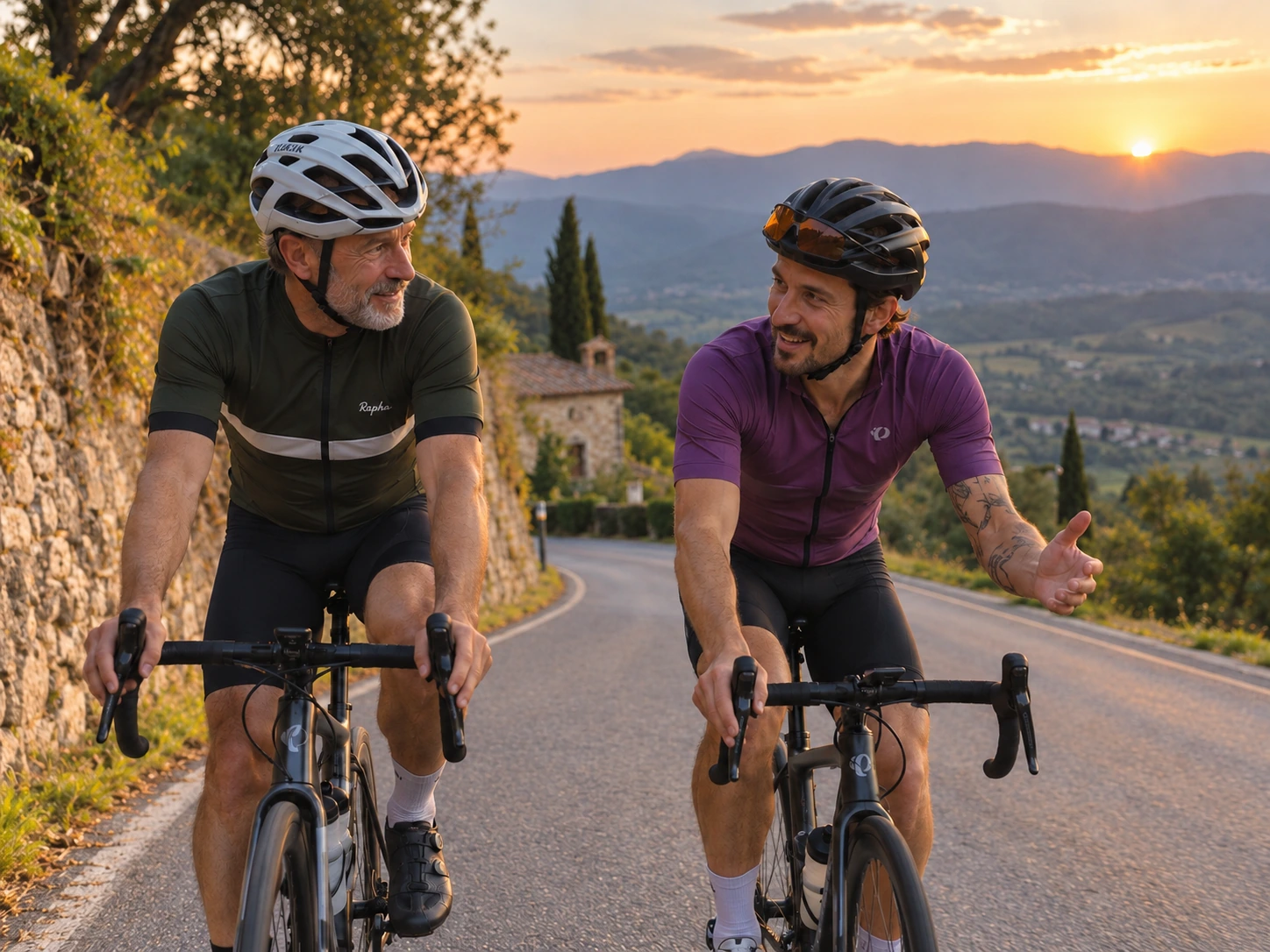
Group of cyclists at sunset after a group ride
Sunset — word of mouth, rider to rider.
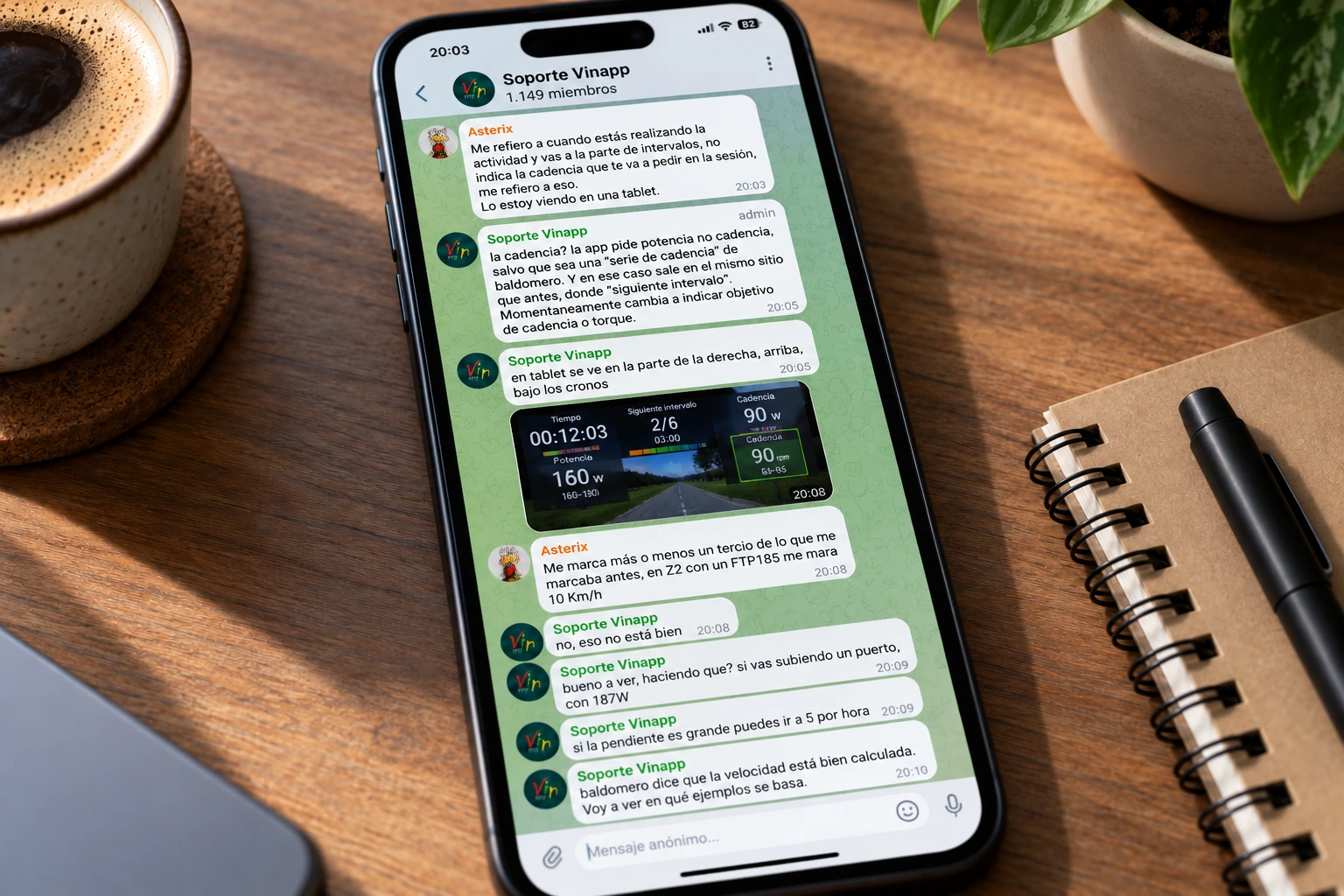
A real conversation in the Vin community on Telegram
Telegram · Real community conversation.

THE VIN COMMUNITY WAS BORN

It was the riders themselves who pushed it forward — they weren't shy about asking for what they needed. Some requests seemed secondary, almost trivial at the time, and they got built anyway. Over time they proved useful; others opened up paths I hadn't anticipated.

That back and forth changed the project. Vin stopped growing from my needs alone. It began to grow around what other riders needed and were willing to ask for.

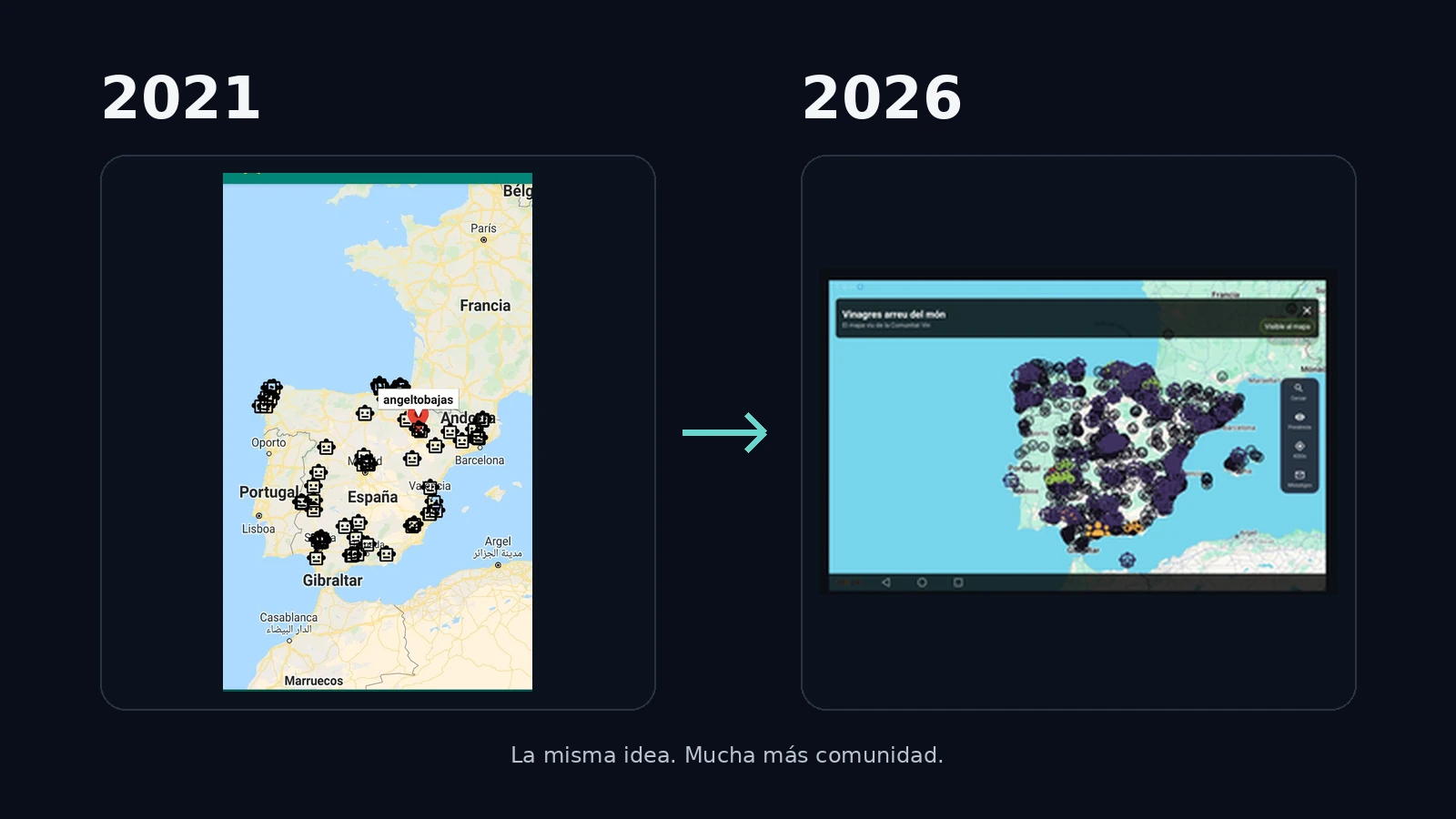
Vin on the map · 2021–2026

There was no campaign behind it. Vin spread by word of mouth, from group to group, from ride to ride. Someone tried it, it worked for them, and they told someone else. Little by little, pockets of Vin appeared in different places.

Want to see how many Vin riders are near you? Check the map in VinApp.

From one map to the next, the same organic growth.

Side-by-side Vin maps from 2021 and 2026, based on real rider data
2021 → 2026 · Real screenshots.

AND THE REST IS VIN HISTORY

From there, every solution exposed the next gap. Planning grew richer. Route simulation linked training indoors with riding outside. Indoor and outdoor sessions became part of the same flow. The analysis got deeper.

Then Baldomero arrived to guide the cycle — plan, train, review, adapt — and help make better-informed decisions. The community became a place to ask questions and share. VinLite made browser-based training possible; Karoo and VinHkE took Vin onto the bike; and Garmin, Strava and Intervals.icu integrations followed.

Not all at once. Layer by layer. Each piece made the next one necessary.

Layer by layer · Every solution revealed the next gap.

2026 · VIN TODAY

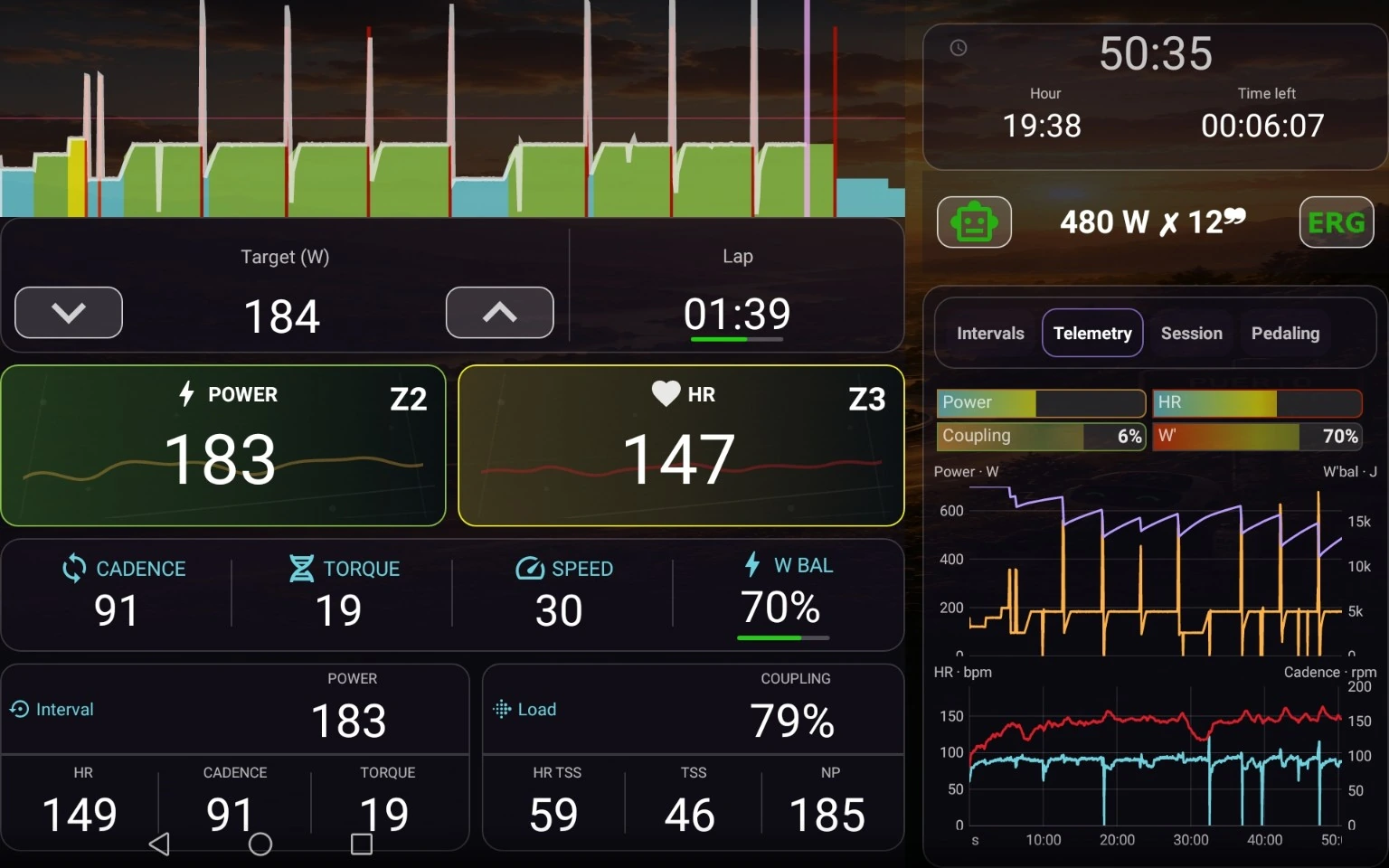
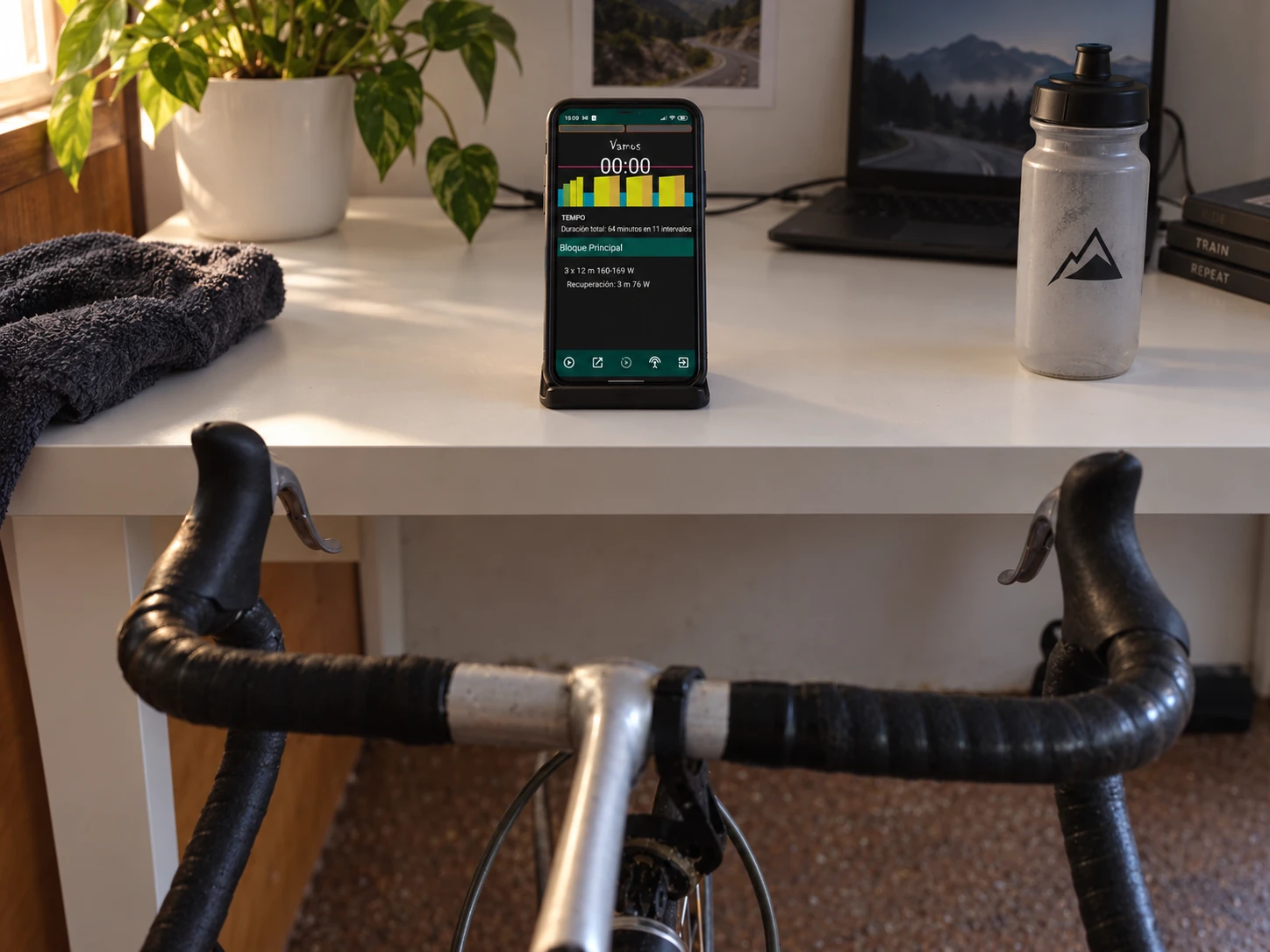
  1. Real live workout with Vin
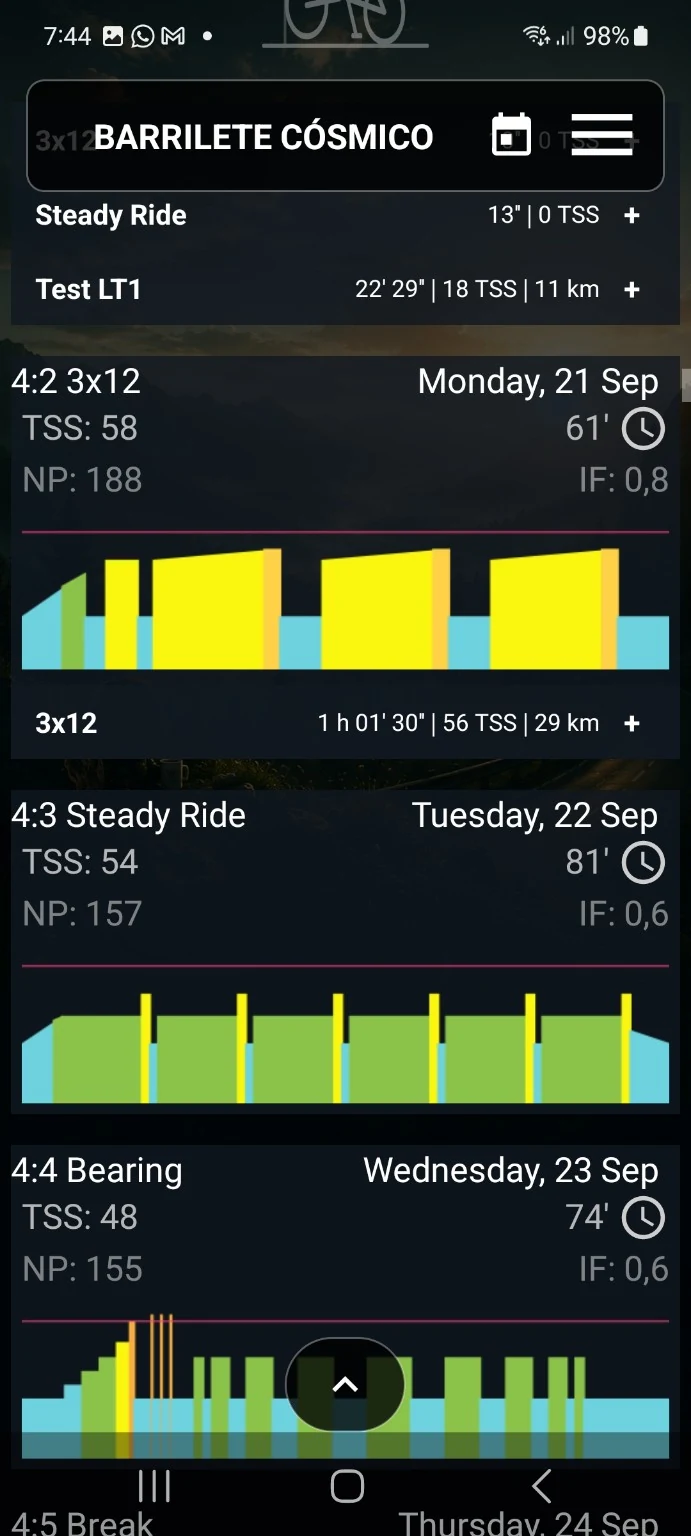
  2. My plan view in VinApp
  3. Plan guided by Baldomero in VinApp
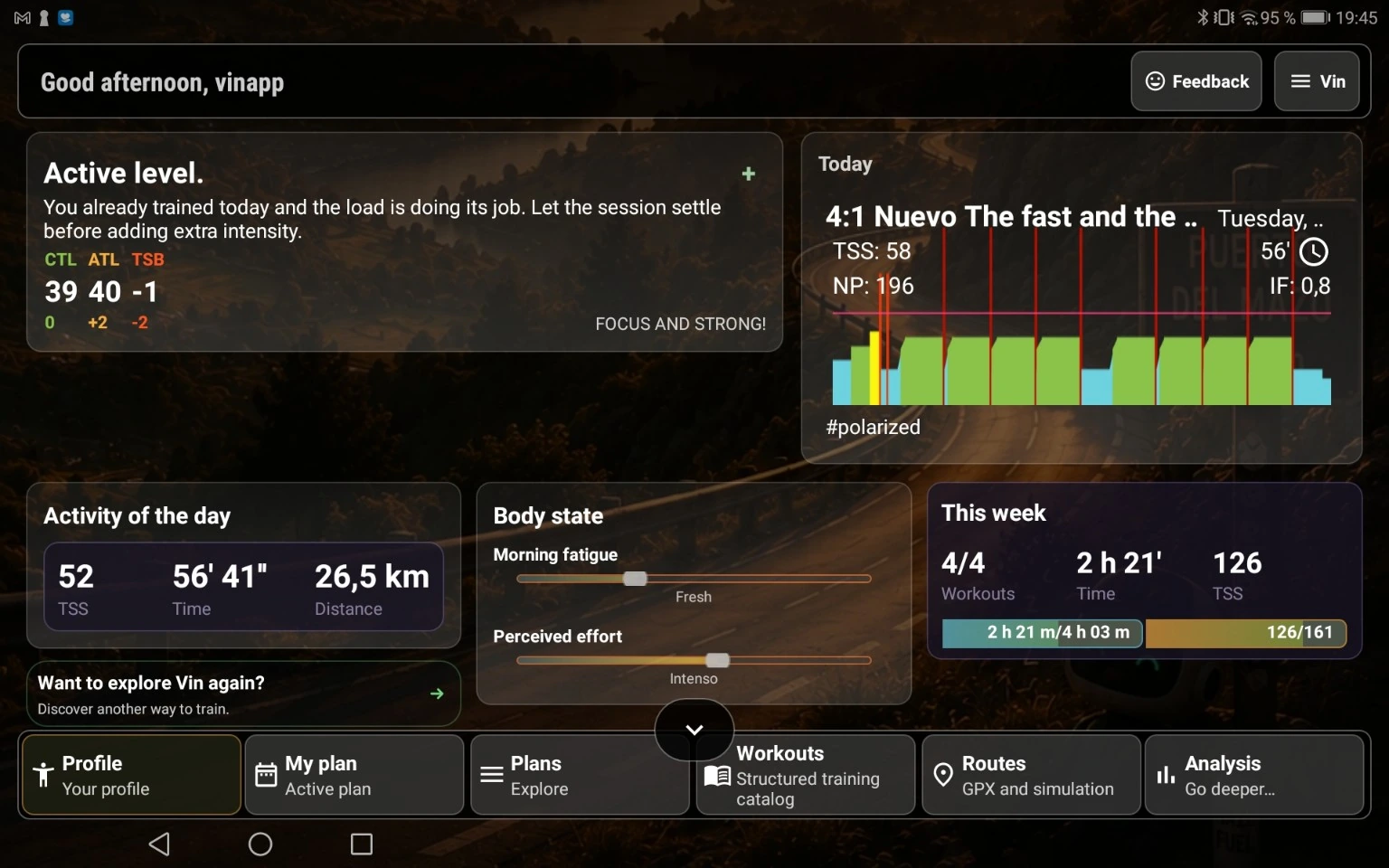
  4. Real home dashboard with Vin
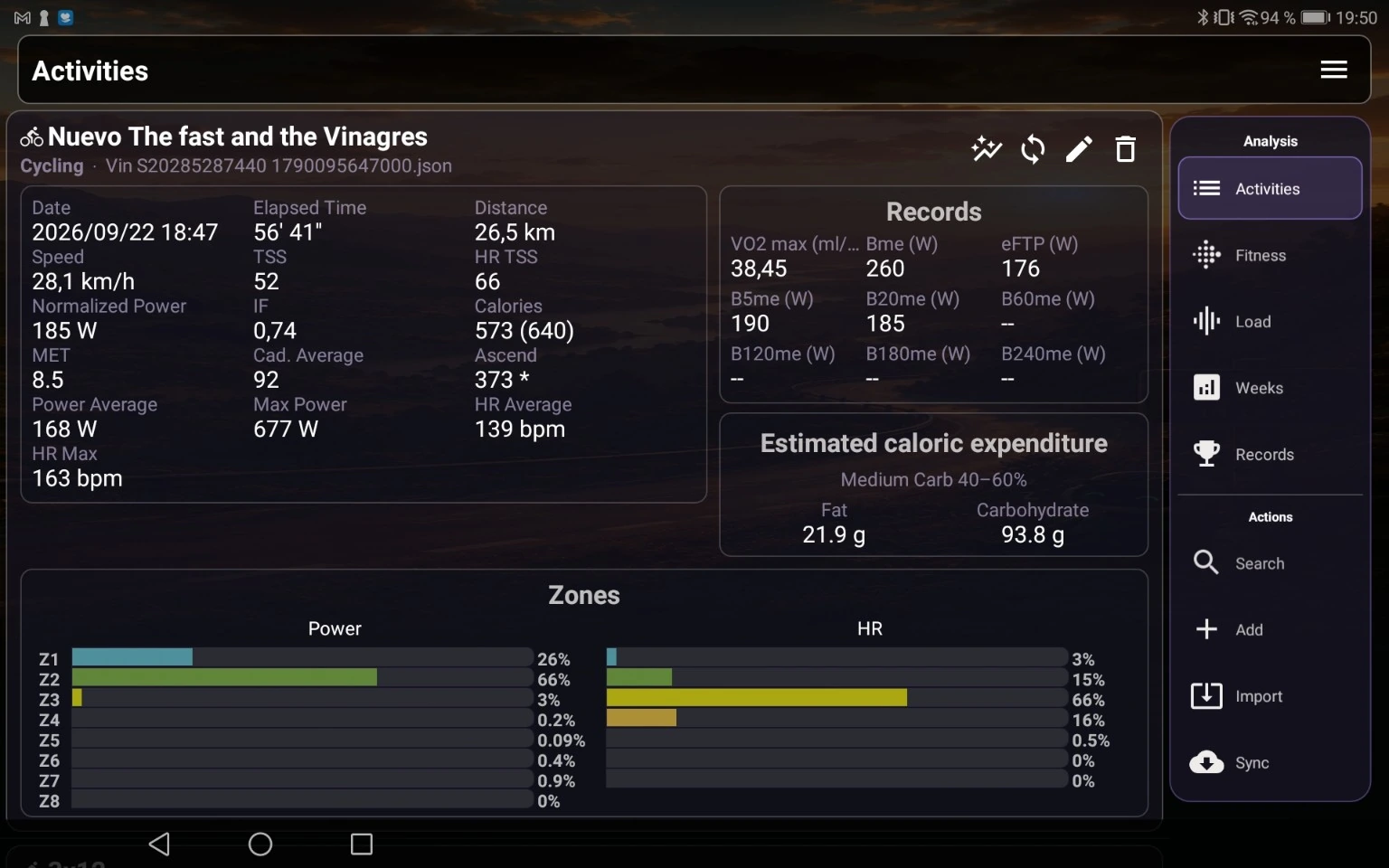
  5. Real activity details with Vin
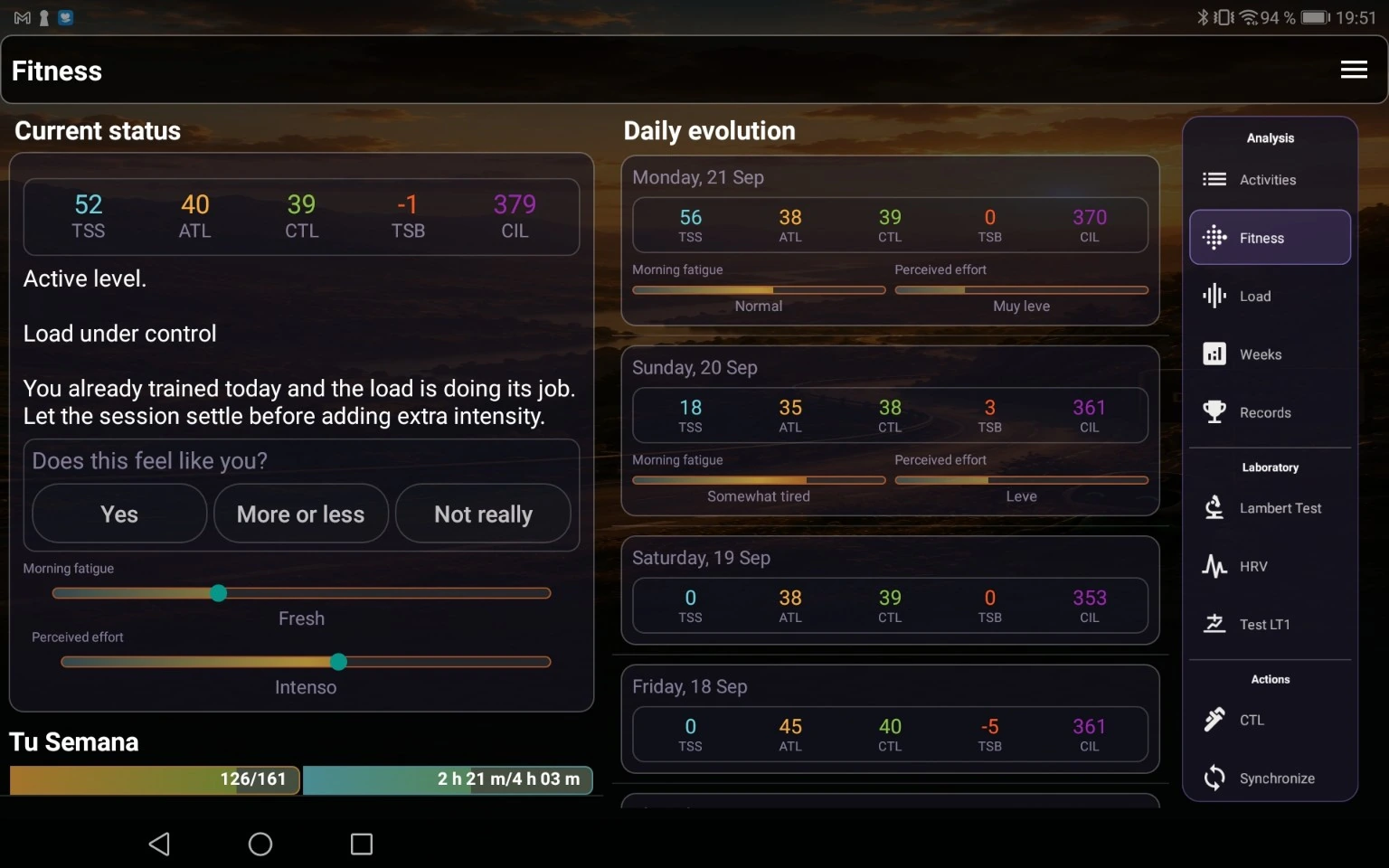
  6. Real fitness status with Vin
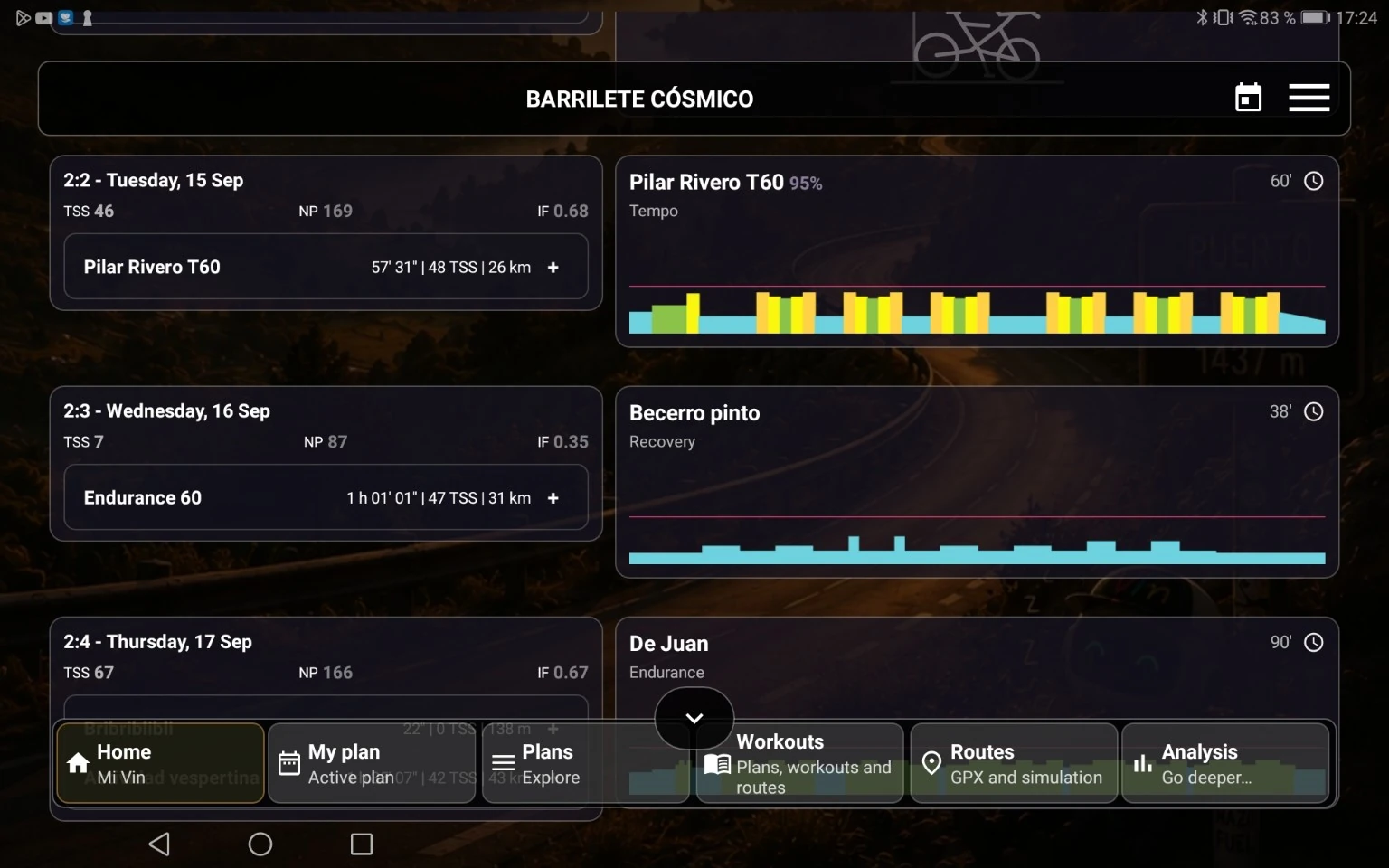
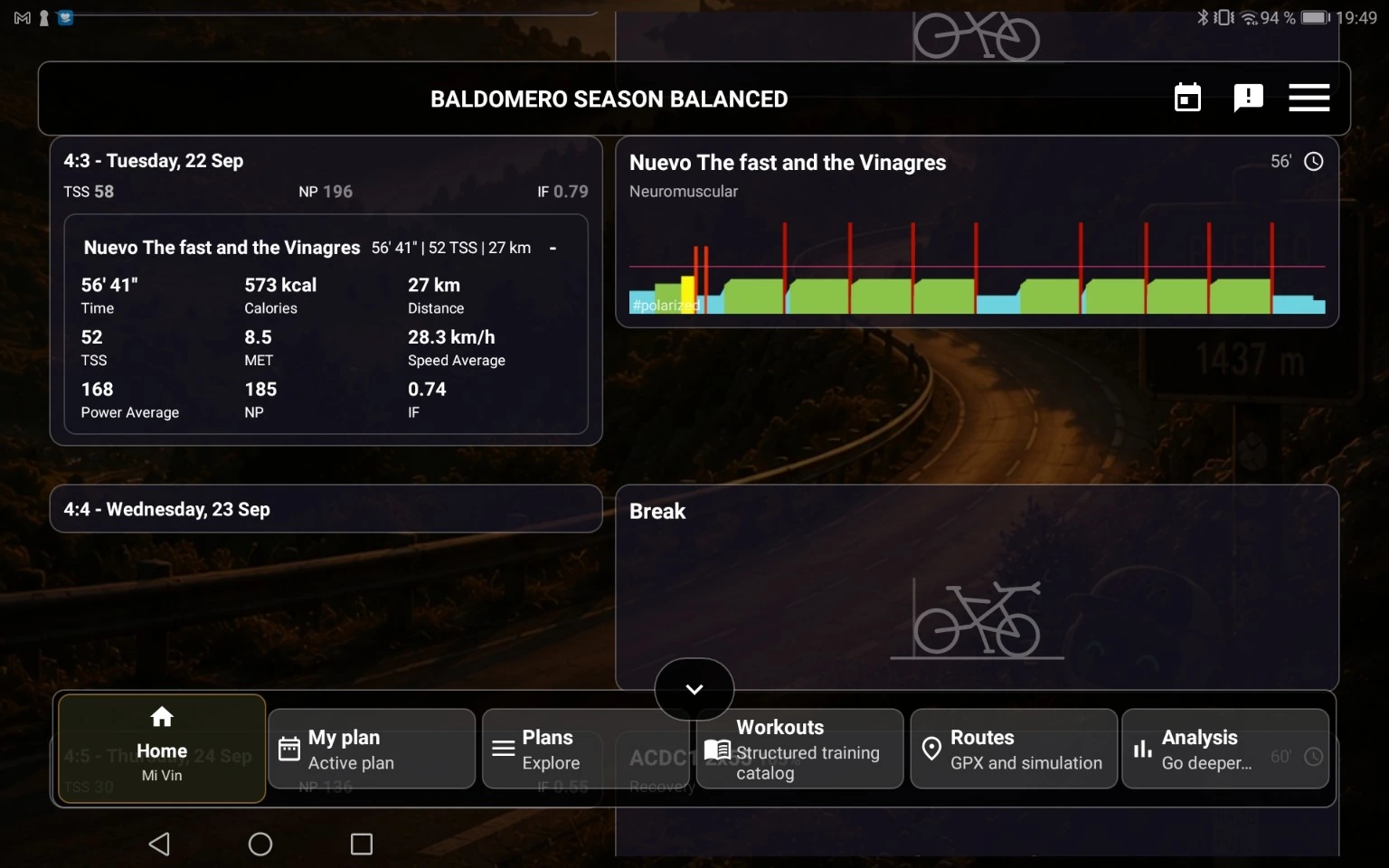
  7. Weekly plan view in VinApp on a tablet
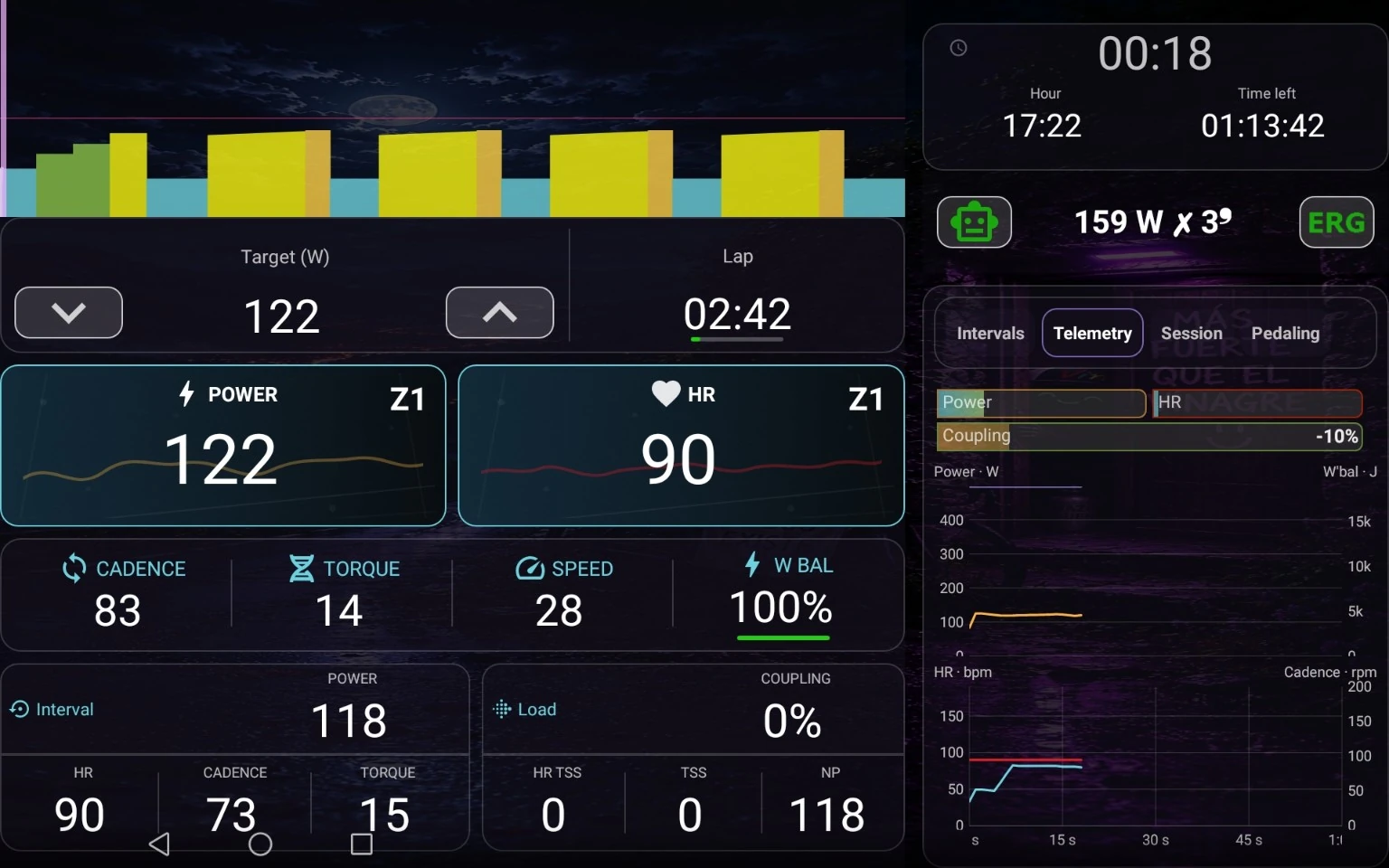
  8. VinApp workout player on a tablet
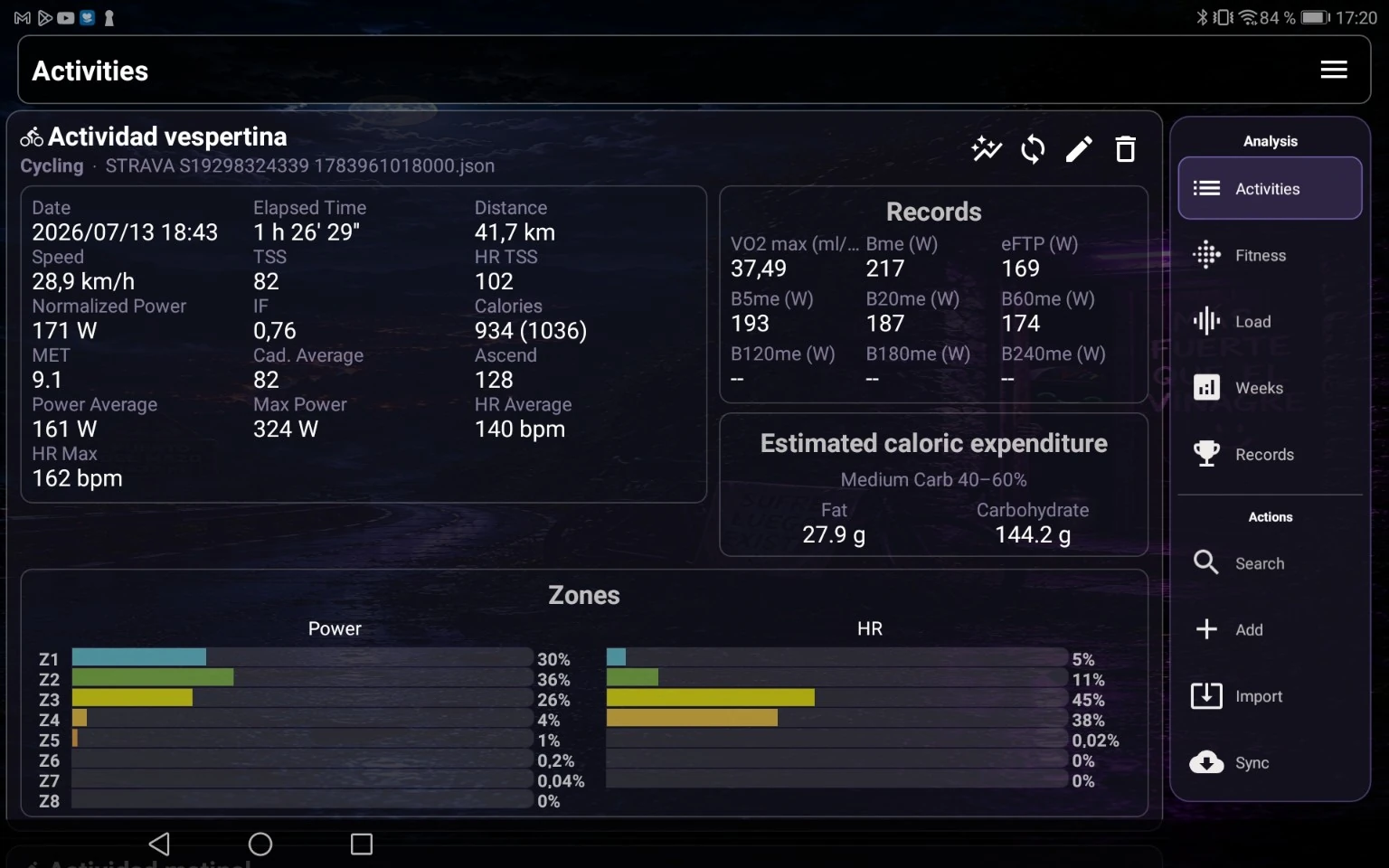
  9. VinApp activity analysis on a tablet
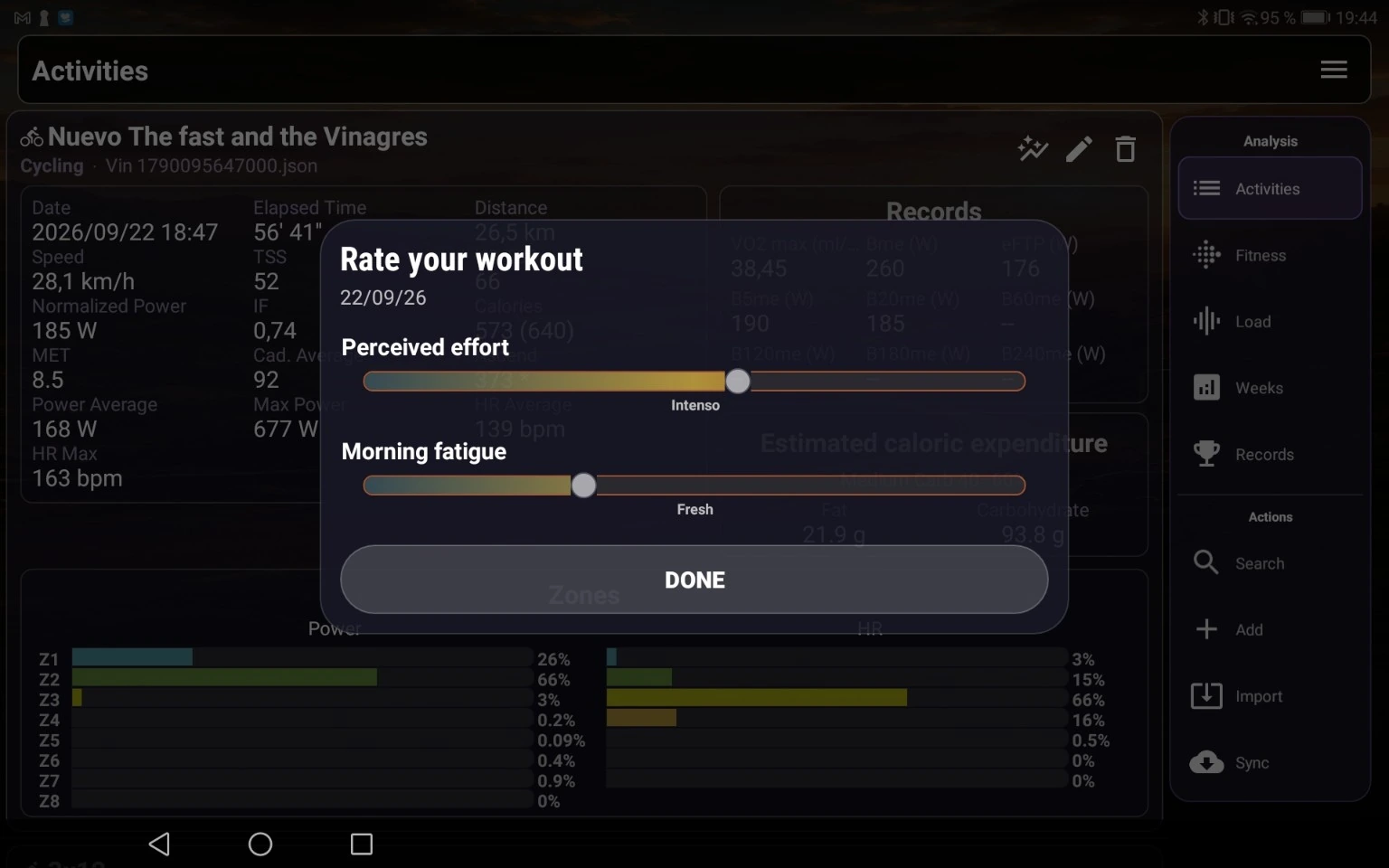
  10. Real workout rating with Vin
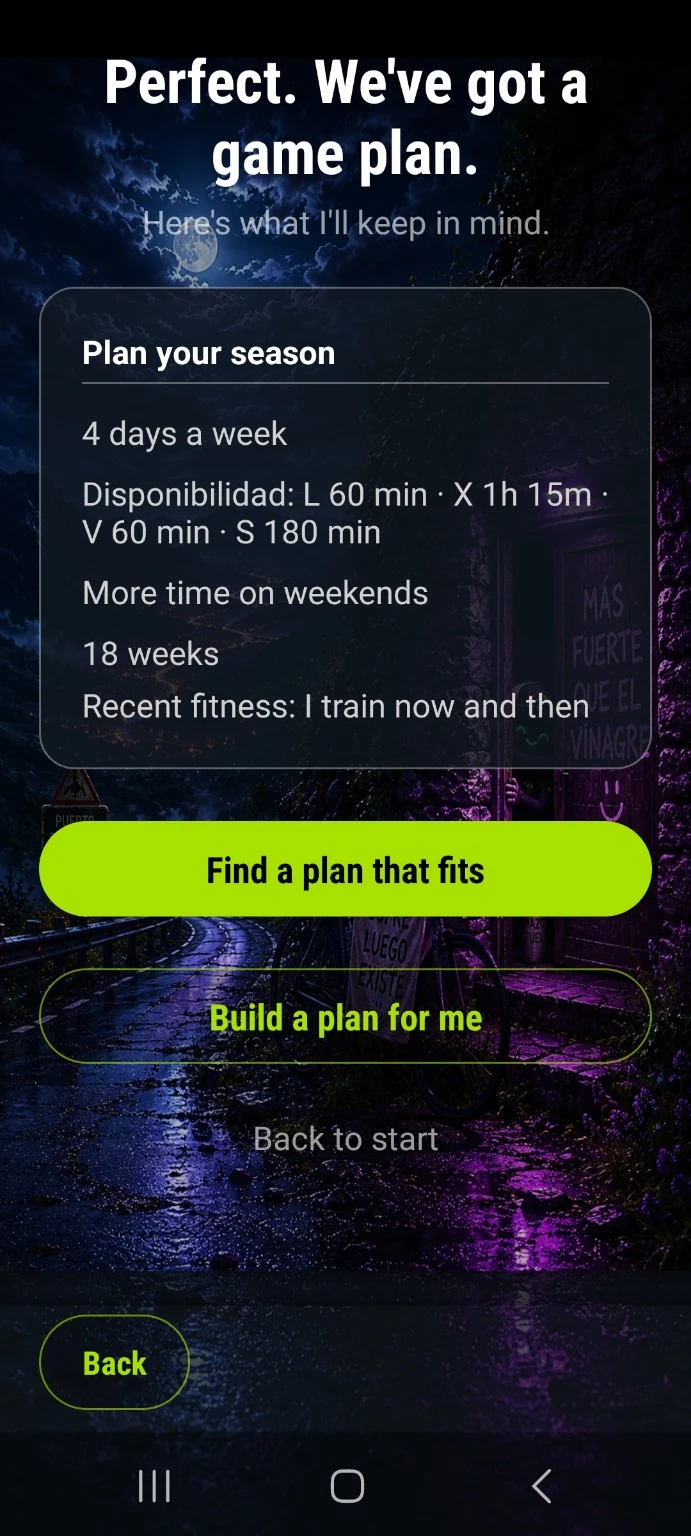
  11. Real season plan with Vin
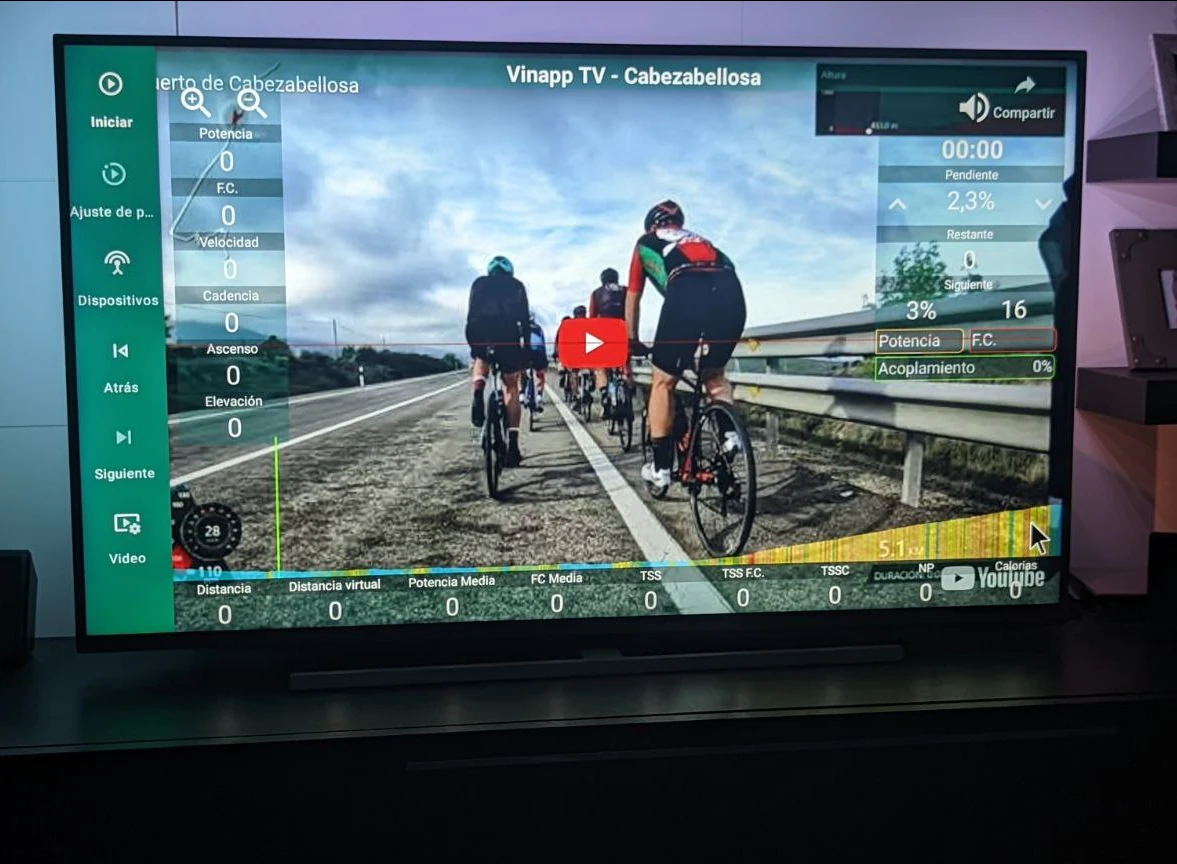
  12. VinApp TV in a rider's home

Vin didn't start big. It started useful.

And it's grown through real-world use, small decisions, experiments, mistakes, requests and persistence. By keeping pedalling and listening to whoever was pedalling alongside.

And as long as there's still something we wish we had on the bike, it's probably not finished yet.

VIN

Thanks for getting in touch!

We've received your message. Thanks for reaching out to Vin. We'll get back to you as soon as we can.